Get Microsoft Ads setup, tools and coupon for
  free!
free! 


Why looking at clicks and conversions alone is no longer enough…
Automation has become a fundamental building block of digital advertising. Most campaigns in Google Ads and Microsoft Advertising today operate with Smart Bidding enabled, automatic targeting, enhanced conversion tracking or modeled data.
According to Google, more than 80% of all Google Ads campaigns now use some form of automated bidding strategy – whether in Search, Shopping, Display, or more complex formats.

This fundamentally changes the way we should evaluate campaign performance. The question is no longer just, “How many conversions did we get?” but rather:
What exactly is the algorithm optimizing for, and what decisions does it make based on this data?
To answer this question, we first need to let go of the lens we’ve been using in PPC for years. In a manual campaign environment, basic metrics provided a relatively clear picture of what worked. With the rise of automation, however, their meaning changes significantly.
Automation changes the meaning of traditional metrics
Automated campaigns work with a large number of real-time signals – user behavior, auction context, historical performance, device, location, audience. Based on these, the system decides bids, ad placements, and budget allocation.
Google and Microsoft openly communicate that their automated strategies optimize exclusively based on goals and signals available in the system – most often conversions and their value.
This means that metrics like CTR, CPA, or ROAS tell us a lot about how well the system is achieving its assigned goal, but alone, they do not explain whether the outcome is optimal from a business perspective.
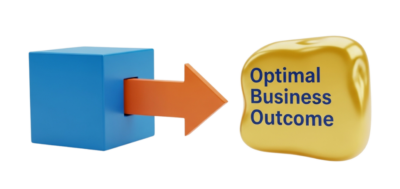
Theoretically, we understand that automation works with different inputs and a different decision-making logic. The question remains: how does this approach manifest in actual campaign data and results?
What data says about the effectiveness of automation
Automation demonstrably improves campaign performance—but it also increases the risk of evaluating results too simplistically.
- Google reports that advertisers who switch from static CPC to Smart Bidding achieve, on average, 20–30% more conversions at the same CPA.
- Analysis by Search Engine Land points out that while automated strategies often increase conversion volume, they also shift budget toward segments with the highest likelihood of conversion, not necessarily the highest business value.
- With broader use of automated strategies, overall campaign performance remains relatively stable, but CPC and CPA gradually increase. This raises the need for careful interpretation of results and evaluating effectiveness beyond basic metrics.
At first glance, automation works. Campaigns generate more conversions, performance is more stable, and the system can efficiently scale reach.
But this is where one of the most common mistakes in performance evaluation occurs.
Why “Good Performance” doesn’t always mean good decisions
In practice, we often see campaigns that:
- show a stable or growing number of conversions
- maintain target CPA or ROAS
- yet consume an increasing share of the budget
Automated systems naturally favor certainty – segments, queries, or audiences that have historically performed well. Without a deeper look at performance over time and across the account, this can lead to:
- inefficient budget allocation
- overlooking weaker but potentially promising parts of the account
- a skewed perception of campaign success
In practice, evaluating performance requires not just looking at individual numbers (CTR, clicks, conversions), but also observing them as trends over time and in the context of the overall marketing mix. Microsoft Advertising supports report creation that includes impressions, clicks, costs, and conversions, providing a more complete picture of how campaigns behave over time and relative to each other.
Looking at performance through isolated numbers or short periods makes it very easy to make decisions that look good in a report – but not in reality. In the era of automation, it’s not enough to track performance; it must be interpreted correctly.
How to look at performance in the age of automation
Evaluating performance today requires a combination of technical metrics and strategic perspective. Key principles include:
- tracking trends over time, not just short-term fluctuations
- comparing performance between campaign types and objectives
- checking data quality and measurement consistency
- understanding the algorithm’s goal versus the business goal
Even Google recommends evaluating automated campaigns in the broader context of the marketing mix and business outcomes, rather than in isolation.
Conclusion
…an analytical foundation before making further decisions.
Automation has changed how campaigns operate and it also changes how we should think about performance. Without a solid analytical foundation, campaigns may perform “correctly” according to the system – but not optimally for the business
Understanding what metrics mean, how they are generated, and what decisions the algorithm makes from them forms the basis for the next strategic topics that naturally follow in marketing.