Get Microsoft Ads setup, tools and coupon for
  free!
free! 


Just a few years ago, entering a question into Google was automatic. Today, more and more people are starting their information journey in AI tools.
Faster answers, clearer explanations, and less distracting content are drawing consumers to ChatGPT, Gemini, or Copilot—and according to the latest study, more than one third of users already prefer AI over traditional search.
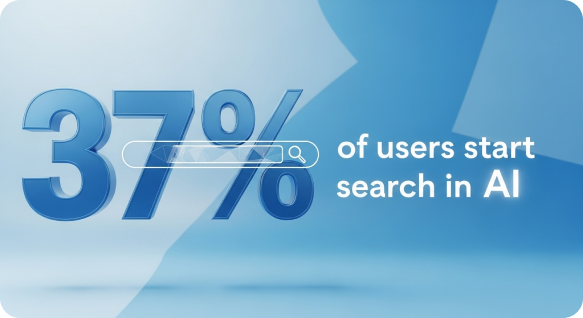
37% of users start their search in AI
According to the “2026 AI & Search Behavior Study”, more than 37% of active AI users begin their search in tools like ChatGPT, Gemini, or Copilot instead of Google or other traditional search engines.
This trend signals a fundamental shift in how people discover information, evaluate brands, and make purchasing decisions.
Why is AI more appealing than traditional search?
- faster answers without the need to click through dozens of links
- clearer and more understandable explanations
- less distracting content, such as ads or “blue links”
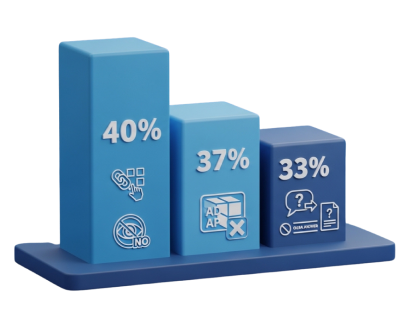
- 40% are tired of too many links
- 37% are bothered by ads and sponsored results
- 33% miss a direct answer
AI and two-step search
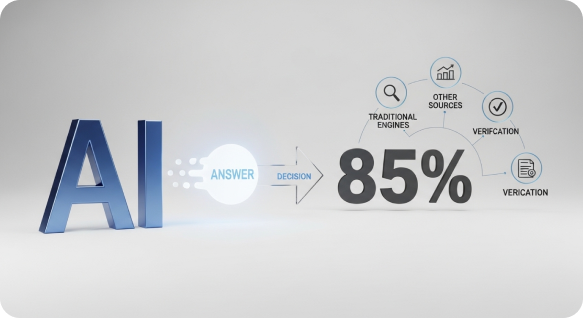
Although AI delivers fast answers, most users (85%) still verify information through traditional search engines or other sources before making a final decision. Search is thus becoming a two-step process, where AI shapes the first impression and traditional search confirms the facts.
AI is changing purchasing behavior
Generative AI is no longer just an answering tool – it is also becoming a consumer advisor:
- users increasingly rely on AI tools to compare products
- search for prices
- summarize reviews before making a purchase decision
This trend applies across categories, from everyday products to technology, fashion, and financial services.
Trust and verification
Levels of trust in AI-generated answers vary according to the survey:
- 47% of users trust AI results to some extent or more
- another 35% trust them to some extent, but with reservations
- only 15% of respondents reported low or no trust in AI results
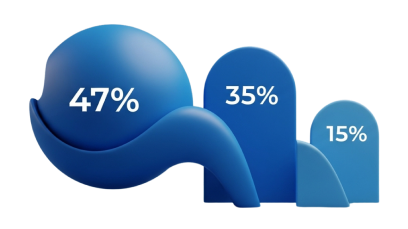
This means that while many users recognize the usefulness of AI, they do not blindly trust it and often verify results or combine them with traditional sources.
Key recommendations for brands
If brands want to keep up with the changing search landscape, optimization for classic SEO alone is no longer enough. As the first point of contact with consumers moves into AI tools, visibility in the answers generated by these systems becomes crucial.
This places new demands on content. It must be clear, easy to understand, and structured in a way that artificial intelligence can correctly comprehend, interpret, and use it in summaries or recommendations.
Brands that underestimate this shift risk being bypassed by consumers at the very first touchpoint – before they even enter the realm of traditional search.
How we respond to these changes
The shift in user behavior is not just theory – it is a reality we are already actively addressing in our solutions.
Within our BlueWiston tool, we use artificial intelligence to create, optimize, and manage ads, helping brands advertise more effectively in an environment where search is moving from traditional search engines to AI tools.
Our goal is to help e-shops and brands:
- adapt faster to AI-driven search
- improve campaign performance without manual work
- be visible not only in Google, but also in AI-generated answers
In practice, this means AI-powered campaign optimization, enrichment of product data, better performance management based on margin or ROAS and gradual preparation for advertising and shopping directly within AI tools such as ChatGPT.